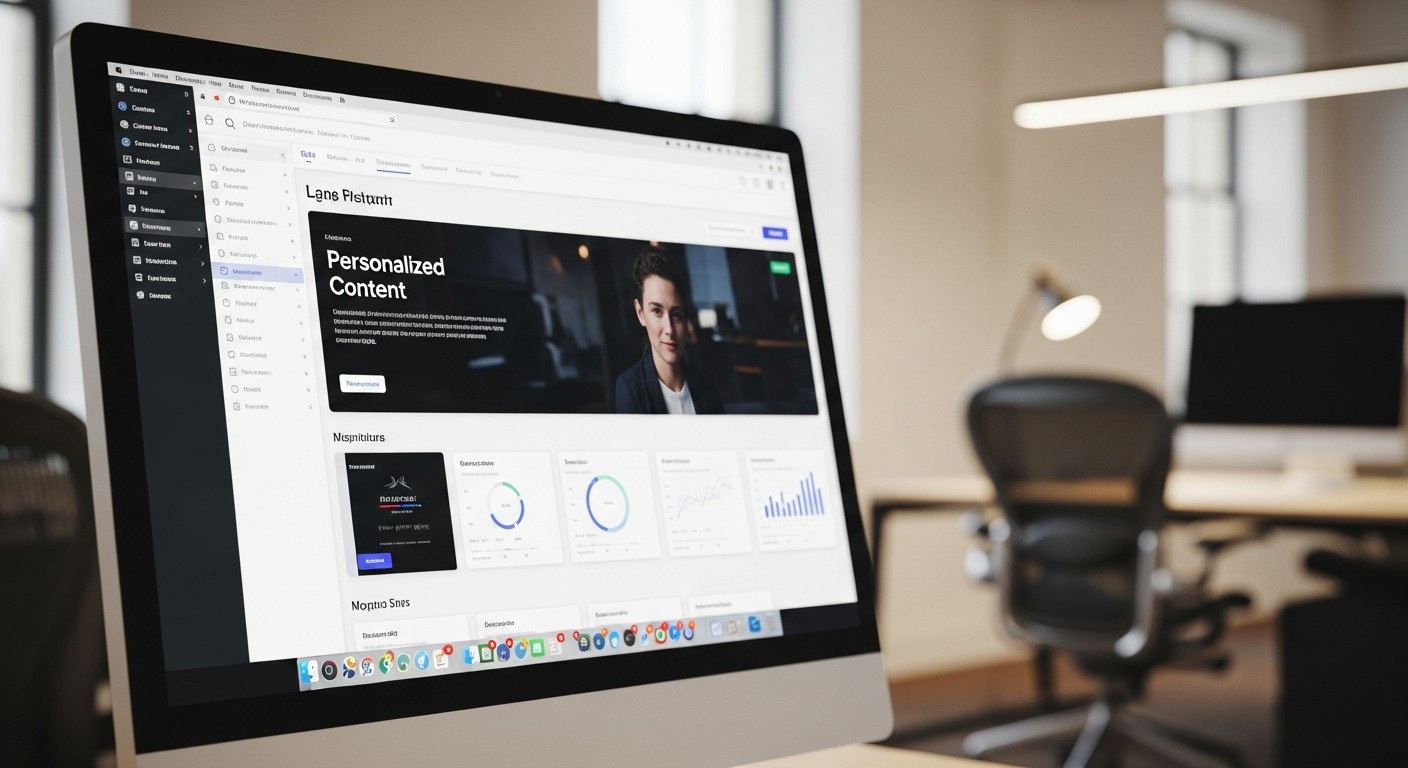
In the evolving landscape of digital interaction, creating engaging and relevant experiences for every user is paramount. This objective is increasingly achieved through the sophisticated application of machine learning, a core component of advanced machine learning applications in modern web and app development. This article delves into how machine learning (ML) empowers website and app developers to tailor content, recommendations, and interfaces, significantly enhancing user engagement and conversion rates.
Understanding Personalization through Machine Learning
Personalized user experiences are not merely about addressing a user by name; they involve dynamically adapting various aspects of a website or application to an individual’s unique preferences, behaviors, and needs. Machine learning models are instrumental in achieving this by processing vast amounts of user data to identify patterns, predict future actions, and make intelligent decisions about what content or features would be most relevant.
The foundation of ML-driven personalization lies in data collection and analysis. User interactions, such as pages visited, items viewed, purchase history, search queries, and even cursor movements, are gathered. This data is then fed into various ML algorithms, including collaborative filtering, content-based filtering, and hybrid recommendation systems, which learn from these patterns without being explicitly programmed for each specific outcome.
Key Pillars of ML-Driven Personalization
-
Data Collection and Feature Engineering: This initial phase involves systematically collecting diverse user data. Features are then engineered from this raw data, transforming it into a format that machine learning algorithms can effectively process. Common scenarios include tracking click-through rates, time spent on pages, demographic information, and past interactions.
-
Algorithm Selection and Training: Different personalization goals require different ML algorithms. For instance, predicting product purchases might use classification algorithms, while recommending similar articles could leverage clustering or collaborative filtering. Models are trained on historical data to learn the relationships between user attributes, behaviors, and preferences.
-
Real-time Adaptation: A critical aspect of effective personalization is the ability to adapt in real-time. As users interact with a website or app, their behavior provides new data points, allowing ML models to update their understanding and adjust recommendations or interfaces almost instantaneously. This dynamic response ensures relevance remains high even as user preferences evolve.
Applications of Machine Learning in Website Personalization
Machine learning opens up a spectrum of possibilities for crafting highly individualized digital experiences. Many situations involve combining several ML techniques to create a cohesive personalized journey.
Content and Product Recommendations
Perhaps the most widely recognized application, ML-powered recommendation engines suggest products, articles, videos, or services to users based on their past behavior, the behavior of similar users, or the characteristics of the content itself. Common scenarios include:
-
E-commerce product suggestions: “Customers who bought this also bought…” or “Recommended for you based on your browsing history.” These often leverage collaborative filtering.
-
News article feeds: Tailoring a user’s news feed to display stories from topics they frequently read or interact with, often using content-based filtering.
-
Streaming service content: Suggesting movies or music tracks based on viewing history, genre preferences, and ratings, employing complex hybrid models.
Adaptive User Interfaces (UI) and User Experiences (UX)
ML can dynamically alter the layout, navigation, or visual elements of a website or app to better suit an individual user. This could involve highlighting specific features, rearranging menu items, or even changing the color scheme based on user engagement patterns. What usually causes problems is a ‘one-size-fits-all’ approach, which ML helps overcome.
-
Personalized landing pages: Displaying different hero images, calls to action, or headlines to visitors based on their referral source, demographic data, or previous interactions with the site.
-
Dynamic navigation: Prioritizing certain menu items or search filters based on a user’s typical journey through the site, making it easier for them to find what they need.
-
Accessibility adjustments: Automatically adjusting font sizes, contrast, or voice controls based on detected user preferences or accessibility settings.
Personalized Search and Discovery
Traditional search functions often return generic results. With ML, search results can be re-ranked and filtered to prioritize items most relevant to the individual user’s context, history, and inferred intent. This significantly improves the efficiency of information retrieval.
-
Contextual search results: A user searching for “shoes” might see different results if they previously browsed running shoes versus dress shoes.
-
Autocompletion and spell correction: ML models learn from collective user input to provide more accurate and personalized suggestions.
Dynamic Pricing and Offers
While often controversial, ML can be used to present personalized pricing or special offers to users based on their perceived value, purchase history, or likelihood to convert. This is common in travel booking sites or subscription services.
-
Targeted discounts: Offering a discount on a product a user has repeatedly viewed but not purchased.
-
Subscription tier recommendations: Suggesting a specific service tier based on a user’s usage patterns or stated needs.
Benefits and Challenges of ML-Driven Personalization
Implementing ML for personalization offers substantial benefits, but also introduces complexities that require careful consideration.
Benefits
-
Increased User Engagement: When content is highly relevant, users are more likely to spend more time on the site or app, exploring more pages and interacting with features.
-
Higher Conversion Rates: Personalized recommendations and tailored experiences often lead to improved conversion rates, whether for purchases, sign-ups, or content consumption.
-
Enhanced Customer Loyalty: Users appreciate experiences that feel designed for them, fostering a sense of value and encouraging repeat visits.
-
Improved Data Insights: The process of building and refining personalization models often yields deeper insights into user behavior and preferences, informing broader business strategies.
Challenges
-
Data Privacy and Ethics: Collecting and utilizing user data necessitates robust privacy measures and ethical considerations. Transparency with users about data usage is crucial for maintaining trust.
-
Computational Resources: Training and deploying sophisticated ML models, especially for real-time personalization, can require significant computational power and infrastructure.
-
Cold Start Problem: For new users with no historical data, it can be challenging to provide accurate personalization. Strategies like default recommendations or asking for initial preferences are often employed.
-
Algorithmic Bias: If the training data contains biases, the ML models can inadvertently perpetuate or amplify them, leading to unfair or suboptimal experiences for certain user segments. Careful model evaluation and bias detection are essential.
The strategic implementation of machine learning for personalized user experiences represents a significant advancement in web and app development. By understanding the underlying mechanisms and carefully navigating the associated challenges, businesses can create digital environments that are not only highly engaging but also deeply resonant with individual user needs.
Leave a Reply