
Posted on Leave a comment

Leveraging the Power of Image Recognition for Business Innovation

TL;DR

Image recognition is transforming businesses. From retail inventory management to medical diagnosis, its applications are vast and impactful. This article explores real-world case studies and provides insights for leveraging this technology.

Introduction

Image recognition, powered by AI and machine learning, is revolutionizing industries. Its ability to analyze images, identify patterns, and extract valuable data opens doors to innovative solutions and streamlined processes. This article delves into specific case studies, showcasing the practical applications and transformative potential of image recognition across diverse business sectors.

Case Study 1: Retail Inventory Management

Imagine a retail store that can automatically track inventory levels just by scanning shelves. Image recognition makes this possible. By analyzing images captured by cameras, retailers can identify products, monitor stock levels, and even detect misplaced items. This improves efficiency, reduces manual labor, and prevents stockouts.

Case Study 2: Medical Diagnosis

Image recognition plays a crucial role in medical diagnosis. AI-powered systems can analyze medical images like X-rays and MRIs to detect anomalies and assist healthcare professionals in making accurate diagnoses. This leads to faster diagnosis, personalized treatment plans, and improved patient outcomes.

Case Study 3: Manufacturing Quality Control

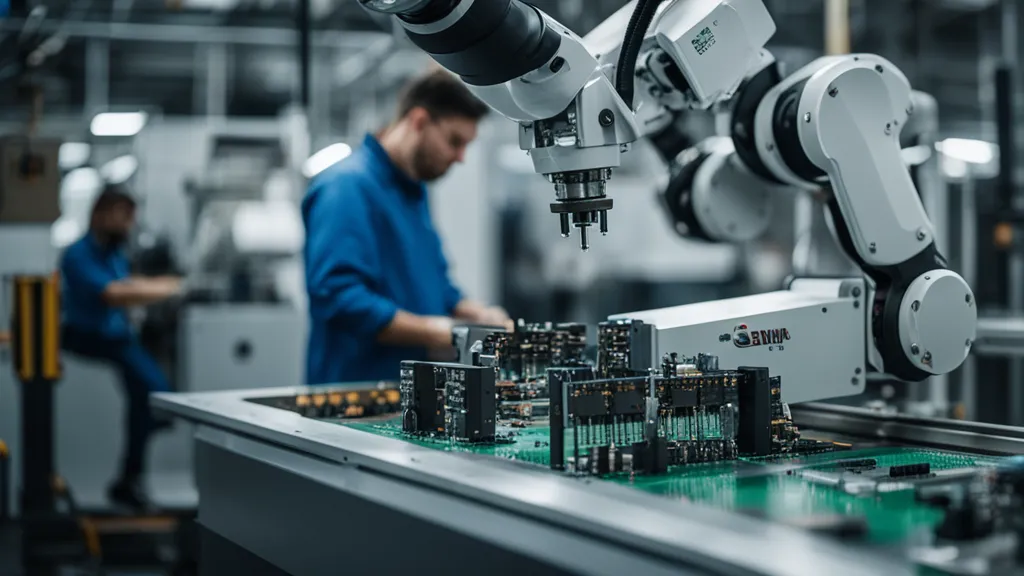
In manufacturing, image recognition ensures product quality. Cameras capture images of products at various stages of production, and AI algorithms identify defects, inconsistencies, or deviations from standards. This automates quality control, reduces waste, and enhances customer satisfaction.

Case Study 4: Security and Surveillance

Image recognition enhances security measures. Facial recognition systems identify individuals, monitor access points, and enhance surveillance capabilities. This improves safety, deters unauthorized access, and aids in investigations.

Case Study 5: Automotive Industry

Self-driving cars rely heavily on image recognition to navigate and make decisions. Cameras capture images of the surroundings, and AI algorithms identify objects, pedestrians, traffic signals, and road conditions. This enables autonomous driving and improves road safety.

Implementing Image Recognition in Your Business

Consider these steps to implement image recognition:

  • Define your objectives: Clearly outline your goals and how image recognition can help achieve them. For instance, if you aim to automate inventory management, specify what aspects you want to automate and what data you need to capture.

  • Data Acquisition: Gather a relevant dataset of images representative of the scenarios you intend to address. Ensure the data is diverse and high-quality, as this directly impacts the accuracy of your image recognition system.

  • Choose the right technology: Explore different image recognition platforms and APIs, selecting the one that best suits your needs and technical capabilities. Consider factors like accuracy, scalability, integration capabilities, and cost.

  • Model Training and Evaluation: Train your image recognition model on your dataset, ensuring it’s robust and accurate. Evaluate its performance on a separate test set to fine-tune its parameters and optimize its performance for your specific use case.

  • Integration and Deployment: Integrate the trained model into your existing systems and workflows. This might involve connecting it to your inventory management system, security cameras, or other relevant platforms.

People Also Ask

What are the key benefits of using image recognition?

Key benefits include improved efficiency, automated processes, reduced manual labor, enhanced accuracy, faster decision-making, and cost savings. It also opens up new possibilities for innovation and competitive advantage.

What are the challenges of implementing image recognition?

Challenges can include data acquisition and quality, computational resources, algorithm selection and training, integration complexities, and ethical considerations related to privacy and bias.

What industries can benefit from image recognition?

Many industries can benefit, including retail, healthcare, manufacturing, security, automotive, e-commerce, agriculture, and finance.

FAQ

How accurate is image recognition?

Accuracy depends on factors like the quality of the training data, the chosen algorithm, and the specific application. In many cases, it can achieve high levels of accuracy, exceeding human capabilities in certain tasks.

Is image recognition expensive?

The cost varies depending on the complexity of the project, the required resources, and the chosen technology. Cloud-based solutions offer scalable and cost-effective options.

How do I get started with image recognition?

Start by defining your objectives, gathering relevant data, and exploring available image recognition platforms and APIs. Consulting with experts can also provide valuable guidance.

Explore the potential of image recognition to innovate and optimize your business operations.
Posted on Leave a comment

Leveraging the Power of Image Recognition with Machine Learning

TL;DR

Image recognition powered by machine learning is transforming industries. This article dives into the core concepts, practical applications, and strategic considerations for businesses looking to leverage this technology. From quality control to medical diagnoses, the potential is vast and rapidly evolving.

Introduction to Image Recognition with Machine Learning

Image recognition, a subset of computer vision, empowers machines to “see” and interpret images much like humans do. Through machine learning algorithms, computers can identify objects, scenes, and patterns within images, opening doors to a wide array of applications.

Core Concepts and Techniques

Several key concepts underpin image recognition. Understanding these is crucial for effective implementation:

  • Convolutional Neural Networks (CNNs): CNNs are specialized neural networks designed specifically for processing image data. They use convolutional layers to extract features from images, allowing the network to learn hierarchical representations of visual information.

  • Transfer Learning: Transfer learning involves utilizing pre-trained models (like Inception or ResNet) as a starting point, fine-tuning them for specific tasks. This significantly reduces training time and data requirements, making it ideal for many applications.

  • Data Augmentation: Data augmentation techniques artificially expand the training dataset by creating variations of existing images. This improves model robustness and reduces overfitting by exposing the model to a wider range of visual scenarios.

Practical Applications of Image Recognition

The applications of image recognition are incredibly diverse and span various sectors:

  • Healthcare: Image recognition assists in medical image analysis, aiding in diagnoses, treatment planning, and disease monitoring. Detecting anomalies in X-rays or identifying cancerous cells in pathology slides are prime examples.

  • Manufacturing: Automating quality control processes, detecting defects, and optimizing production lines are key uses in manufacturing. Image recognition systems can identify inconsistencies and flaws in products, ensuring high quality and efficiency.

  • Retail: Visual search, personalized recommendations, and inventory management benefit from image recognition. Customers can search for products using images, and retailers can gain insights into customer preferences.

Strategic Considerations for Businesses

Implementing image recognition effectively requires careful planning:

  • Data Quality and Quantity: High-quality, labeled data is essential for training accurate models. Gathering and preparing a robust dataset is a critical first step.

  • Choosing the Right Model: Selecting the appropriate machine learning model depends on the specific task, available resources, and desired accuracy. Evaluating different models and architectures is crucial for optimal performance.

  • Integration and Deployment: Integrating image recognition into existing workflows and systems is essential for realizing its full potential. Planning for deployment and ongoing maintenance ensures smooth operation.

People Also Ask

  • Question: What are the key challenges in implementing image recognition?
    Answer: Data acquisition, computational resources, and model accuracy are some significant challenges. Ensuring sufficient, high-quality data is crucial. Additionally, training complex models requires substantial processing power. Balancing accuracy with computational cost remains an ongoing consideration.

  • Question: How can image recognition improve business efficiency?
    Answer: Automating tasks, reducing manual labor, and improving decision-making are key ways image recognition boosts efficiency. In manufacturing, it can automate quality control. In retail, it can personalize recommendations. These improvements lead to cost savings and increased productivity.

  • Question: What’s the future of image recognition?
    Answer: The future looks bright, with advancements in areas like edge computing and real-time processing. As models become more efficient and hardware improves, we can expect wider adoption and more sophisticated applications, particularly in mobile and embedded devices.

FAQ

What is image recognition?
Image recognition is a technology that allows computers to identify objects, places, and people in images.

How does machine learning play a role in image recognition?
Machine learning algorithms, particularly deep learning models like CNNs, are used to train computers to recognize patterns and features in images.

What are some common applications of image recognition?
Image recognition is used in various fields, including healthcare (medical image analysis), manufacturing (quality control), and retail (visual search).

Conclusion

Image recognition powered by machine learning offers transformative potential across industries. By understanding the core concepts, practical applications, and strategic considerations, businesses can effectively leverage this technology to drive innovation and achieve their objectives.

Posted on Leave a comment

Unlocking the Power of Vision: Image Recognition in Mobile Apps

TL;DR

Image recognition is transforming mobile apps, offering powerful features from visual search to augmented reality. Developing these features requires careful consideration of various factors such as choosing the right API, optimizing for performance, and addressing ethical implications.

Introduction

Mobile apps are no longer limited by traditional input methods. Image recognition has emerged as a game-changer, allowing users to interact with apps in exciting new ways. This technology opens doors to innovative features and enhanced user experiences.

Core Concepts of Image Recognition

At its heart, image recognition involves training algorithms to identify objects, scenes, and patterns within images. This process typically leverages machine learning models that learn from massive datasets of labeled images. Different techniques, like convolutional neural networks (CNNs), are used to analyze visual data and extract meaningful features.

Choosing the Right API/SDK

Several powerful APIs and SDKs simplify the integration of image recognition into mobile apps. Popular choices include Google Cloud Vision API, Amazon Rekognition, and Clarifai. Each offers unique strengths and weaknesses regarding accuracy, speed, and supported features. Selecting the right one depends on the specific needs of your app.

Optimizing for Performance

Image recognition can be computationally intensive. Optimizing for performance is crucial for a smooth user experience. Techniques like image compression, caching, and efficient data handling can significantly improve response times and reduce battery drain.

Ensuring User Privacy and Data Security

Handling user images responsibly is paramount. Data privacy and security must be prioritized. Implement robust security measures to protect user data and comply with relevant regulations. Transparency with users about how their images are being used is essential for building trust.

Future Trends in Mobile Image Recognition

The field of image recognition is constantly evolving. Emerging trends like on-device processing, federated learning, and advancements in AI models promise even more powerful and efficient image recognition capabilities in the future.

Real-World Examples

Image recognition is already powering a wide range of mobile app features. Visual search allows users to find products by taking a picture. Augmented reality applications overlay digital information onto the real world. Accessibility features use image recognition to assist users with visual impairments. These are just a few examples of the transformative power of image recognition.

Conclusion

Image recognition is revolutionizing how users interact with mobile apps. By understanding the core concepts, choosing the right tools, and addressing ethical considerations, developers can unlock the full potential of this technology and create truly innovative mobile experiences.

People Also Ask

  • Question: What are the main challenges in implementing image recognition in mobile apps?

    Answer: Key challenges include ensuring accuracy across diverse image conditions, optimizing for performance on resource-constrained devices, and addressing privacy concerns related to user image data.

  • Question: How can I choose the best image recognition API for my mobile app?

    Answer: Consider factors like the specific features required by your app, the accuracy and speed of the API, the pricing model, and the level of support offered.

  • Question: What are the ethical considerations for using image recognition in mobile apps?

    Answer: It’s crucial to handle user image data responsibly, ensure transparency about data usage, and address potential biases in image recognition algorithms.

FAQ

  • What are the main keywords related to image recognition in mobile apps? Image recognition, computer vision, mobile apps, AI, machine learning, visual search, augmented reality.
  • What is the target audience for this article? Mobile app developers, product managers, and tech enthusiasts interested in image recognition.
  • What is the main topic of this article? Unlocking the Power of Vision: Image Recognition in Mobile Apps.
  • What is the title of this article? Unlocking the Power of Vision: Image Recognition in Mobile Apps.
  • What is the topic description? Unlocking the Power of Vision: Image Recognition in Mobile Apps.
Posted on Leave a comment

Unlocking the Power of Vision: Image Recognition in Mobile Apps

TL;DR

Image recognition is transforming mobile apps, offering powerful features from visual search to augmented reality. Developing these features requires careful consideration of various factors such as choosing the right API, optimizing for performance, and addressing ethical implications.

Introduction

Mobile apps are no longer limited by traditional input methods. Image recognition has emerged as a game-changer, allowing users to interact with apps in exciting new ways. This technology opens doors to innovative features and enhanced user experiences.

Core Concepts of Image Recognition

At its heart, image recognition involves training algorithms to identify objects, scenes, and patterns within images. This process typically leverages machine learning models that learn from massive datasets of labeled images. Different techniques, like convolutional neural networks (CNNs), are used to analyze visual data and extract meaningful features.

Choosing the Right API/SDK

Several powerful APIs and SDKs simplify the integration of image recognition into mobile apps. Popular choices include Google Cloud Vision API, Amazon Rekognition, and Clarifai. Each offers unique strengths and weaknesses regarding accuracy, speed, and supported features. Selecting the right one depends on the specific needs of your app.

Optimizing for Performance

Image recognition can be computationally intensive. Optimizing for performance is crucial for a smooth user experience. Techniques like image compression, caching, and efficient data handling can significantly improve response times and reduce battery drain.

Ensuring User Privacy and Data Security

Handling user images responsibly is paramount. Data privacy and security must be prioritized. Implement robust security measures to protect user data and comply with relevant regulations. Transparency with users about how their images are being used is essential for building trust.

Future Trends in Mobile Image Recognition

The field of image recognition is constantly evolving. Emerging trends like on-device processing, federated learning, and advancements in AI models promise even more powerful and efficient image recognition capabilities in the future.

Real-World Examples

Image recognition is already powering a wide range of mobile app features. Visual search allows users to find products by taking a picture. Augmented reality applications overlay digital information onto the real world. Accessibility features use image recognition to assist users with visual impairments. These are just a few examples of the transformative power of image recognition.

Conclusion

Image recognition is revolutionizing how users interact with mobile apps. By understanding the core concepts, choosing the right tools, and addressing ethical considerations, developers can unlock the full potential of this technology and create truly innovative mobile experiences.

People Also Ask

  • Question: What are the main challenges in implementing image recognition in mobile apps?

    Answer: Key challenges include ensuring accuracy across diverse image conditions, optimizing for performance on resource-constrained devices, and addressing privacy concerns related to user image data.

  • Question: How can I choose the best image recognition API for my mobile app?

    Answer: Consider factors like the specific features required by your app, the accuracy and speed of the API, the pricing model, and the level of support offered.

  • Question: What are the ethical considerations for using image recognition in mobile apps?

    Answer: It’s crucial to handle user image data responsibly, ensure transparency about data usage, and address potential biases in image recognition algorithms.

FAQ

  • What are the main keywords related to image recognition in mobile apps? Image recognition, computer vision, mobile apps, AI, machine learning, visual search, augmented reality.
  • What is the target audience for this article? Mobile app developers, product managers, and tech enthusiasts interested in image recognition.
  • What is the main topic of this article? Unlocking the Power of Vision: Image Recognition in Mobile Apps.
  • What is the title of this article? Unlocking the Power of Vision: Image Recognition in Mobile Apps.
  • What is the topic description? Unlocking the Power of Vision: Image Recognition in Mobile Apps.