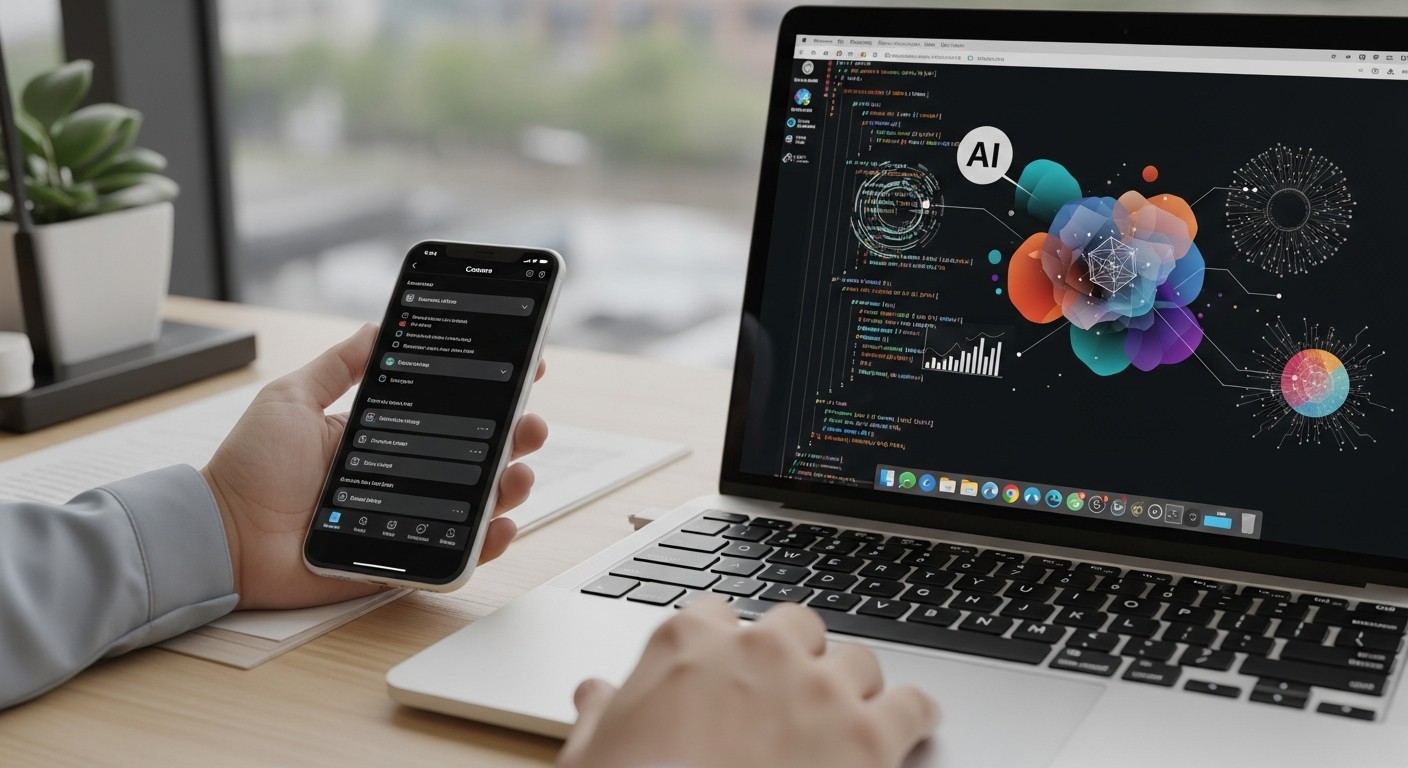
TL;DR: Artificial intelligence significantly transforms web and app development by enhancing user experiences through personalization and intelligent interfaces, optimizing development workflows with automation, and enabling advanced functionalities like predictive analytics. Understanding these specific impacts helps developers integrate AI effectively into their projects.
The Evolving Role of AI in Digital Solutions
Artificial intelligence, or AI, is no longer just a futuristic concept; it’s a foundational element actively reshaping how digital products are conceived, built, and interacted with. For businesses and individuals involved in web development and app development, grasping the specific ways AI influences these areas is crucial. This discussion focuses on the direct impact of AI within these development paradigms, rather than a broad overview of AI itself.
Enhancing User Experience with Intelligent Interfaces
One of the most immediate and visible impacts of AI in web and app development is its ability to create more dynamic and personalized user experiences. AI algorithms can analyze user behavior, preferences, and historical data to tailor content, recommendations, and interfaces. For instance, an e-commerce application might use machine learning to suggest products based on past purchases and browsing patterns, significantly improving conversion rates and user satisfaction. Similarly, AI-powered chatbots integrated into websites provide instant customer support, guiding users through queries and tasks without human intervention, thereby streamlining interactions and reducing response times.
- **Personalized Content Delivery**: AI analyzes user data to present highly relevant articles, products, or services.
- **Intelligent Search**: Search functions powered by AI understand context and intent, delivering more accurate results.
- **Voice Interfaces**: AI enables natural language processing for voice commands, making apps more accessible and intuitive.
- **Adaptive UI/UX**: Interfaces can dynamically adjust based on user behavior and environmental factors, optimizing for engagement.
Optimizing Development Workflows and Efficiency
Beyond the user-facing aspects, AI also offers substantial benefits to the development process itself. Integrating AI tools into the development pipeline can automate repetitive tasks, identify potential issues early, and even assist in code generation. This can lead to faster development cycles, reduced costs, and higher-quality outputs. For example, AI-driven testing tools can autonomously explore application functionalities, detect bugs, and report vulnerabilities far more efficiently than manual testing. Predictive analytics can also be applied to project management, forecasting potential delays or resource shortages based on historical project data.
- **Automated Testing and Quality Assurance**: AI identifies bugs and performance bottlenecks with greater speed and accuracy.
- **Code Generation and Refactoring**: AI assistants can suggest code snippets, optimize existing code, or even generate entire modules.
- **Security Vulnerability Detection**: AI algorithms scan codebases for potential security flaws, enhancing the overall robustness of applications.
- **Resource Allocation Optimization**: AI can predict project timelines and resource needs, improving planning.
Enabling Advanced Functionality and Predictive Capabilities
AI empowers web and mobile applications with functionalities that were previously complex or impossible to implement. This includes features like real-time data analysis, predictive modeling, and sophisticated automation. Consider a financial app that uses AI to analyze market trends and provide personalized investment advice, or a logistics platform that optimizes delivery routes using complex algorithms. These advanced capabilities are often facilitated by robust cloud hosting environments that provide the necessary computational power and data storage for AI models, coupled with seamless API integration to connect various services.
- **Real-time Data Processing**: AI enables applications to process and react to large datasets instantly.
- **Predictive Analytics**: Forecasting trends, user behavior, and system performance becomes possible with AI models.
- **Recommendation Engines**: Sophisticated algorithms suggest relevant content, products, or services based on complex patterns.
- **Anomaly Detection**: AI can identify unusual activities in data streams, crucial for fraud detection or system health monitoring.
The integration of AI into web and app development is a dynamic field. Its impact is specific, offering tangible improvements in user interaction, development efficiency, and the scope of application capabilities. For those navigating the complexities of modern digital projects, understanding these direct applications of AI is key to building innovative and effective solutions.
Leave a Reply