Posted on Leave a comment

How Can Edge AI Enhance Your App’s Performance and Privacy?

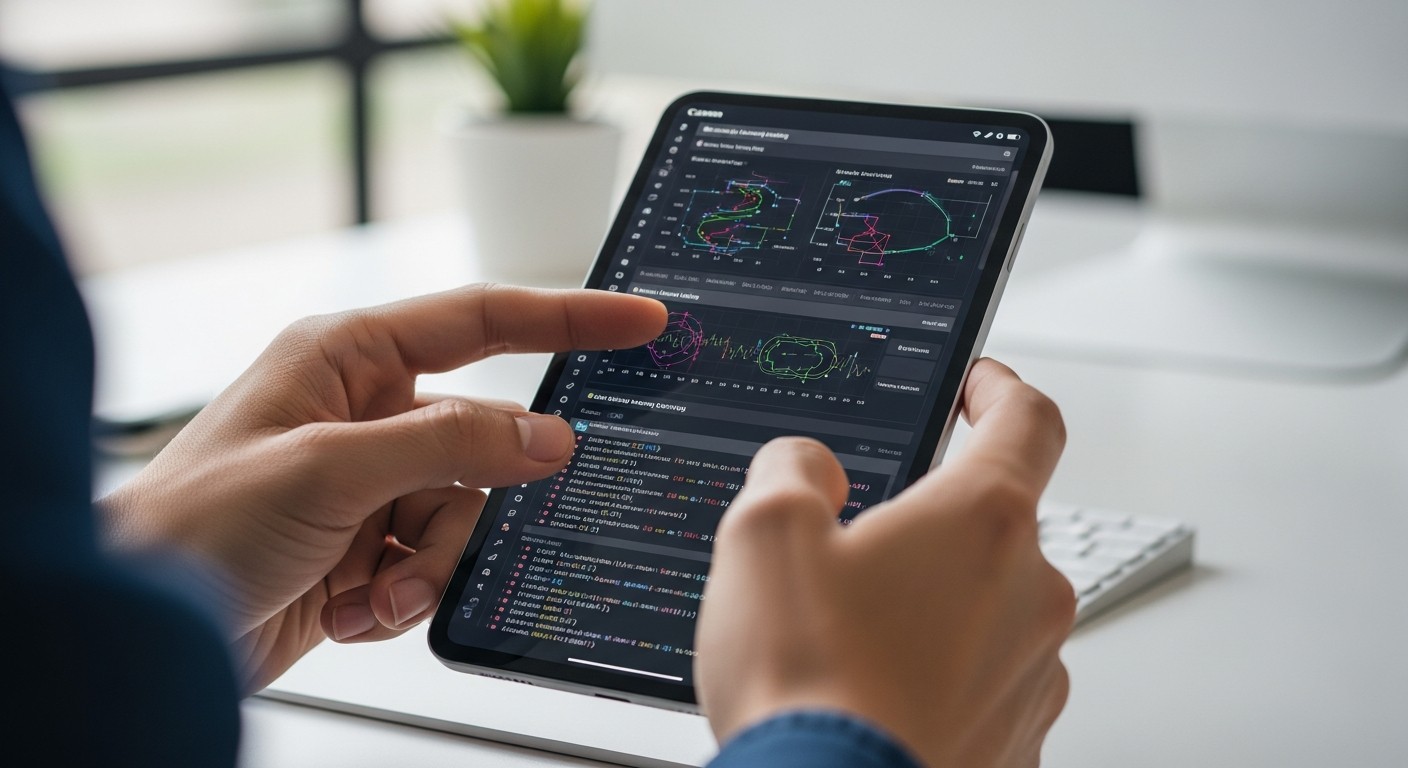
In the evolving landscape of digital technology, the demand for faster, more secure, and highly responsive applications is constant. One transformative approach gaining traction is the deployment of machine learning models directly on user devices, often referred to as Edge AI or On-Device ML. This method moves computational power closer to the data source, offering significant advantages for modern app development.

This article dives into the specifics of how Edge AI and On-Device ML can unlock superior performance and bolster privacy within your applications. For a broader understanding of various machine learning applications, you can explore our comprehensive resources on the topic.

Understanding Edge AI and On-Device Machine Learning

Edge AI involves running AI algorithms directly on a local device, such as a smartphone, tablet, or IoT sensor, rather than relying solely on cloud servers for processing. This means that the machine learning model, once trained, is integrated into the application itself. When the app needs to make a prediction or perform an intelligent task, it uses the on-device model rather than sending data to a remote server for processing.

This approach contrasts with traditional cloud-based AI, where data is transmitted to a central server, processed, and then results are sent back to the device. While cloud AI offers scalability and powerful computational resources, it introduces latency and potential privacy concerns due to data transfer.

Key Benefits for Your Applications

Integrating Edge AI and On-Device ML brings several compelling benefits that can differentiate your applications in a competitive market:

  • Enhanced Performance and Speed: Processing data locally eliminates the need for network communication with a cloud server. This significantly reduces latency, leading to faster response times and a smoother user experience. For real-time applications like augmented reality, live video analysis, or quick predictive text, this speed is crucial.

  • Improved Data Privacy and Security: When data is processed on the device, sensitive information doesn’t need to leave the user’s control. This minimizes the risk of data breaches during transit or storage on external servers, addressing growing concerns about data privacy and compliance with regulations like GDPR or CCPA. For applications handling personal health information or financial data, this is a significant advantage.

  • Offline Functionality: Applications with on-device ML models can function effectively even without an internet connection. This is invaluable for users in areas with limited or no connectivity, or for applications that need to operate in environments where network access is restricted. Imagine a translation app that works perfectly on a remote hiking trail or a diagnostic tool used in areas without Wi-Fi.

  • Reduced Cloud Costs: By shifting computational load from the cloud to the edge device, businesses can potentially lower their operational costs associated with cloud computing resources, data transfer, and storage. This can be especially impactful for applications with a large user base or those that generate vast amounts of data.

  • Personalized User Experiences: On-device models can quickly adapt to individual user behavior and preferences without constantly sending data to the cloud. This allows for highly personalized features, such as tailored recommendations, adaptive interfaces, or custom filters, all while maintaining user privacy.

Practical Applications and Use Cases

The versatility of Edge AI and On-Device ML opens doors for innovative features across various application types:

  • Mobile App Development: From real-time image recognition for photo editing apps to intelligent voice assistants that process commands locally, mobile applications are prime candidates. Think of facial recognition for unlocking devices or smart keyboards predicting your next word instantly.

  • Web Development with Progressive Web Apps (PWAs): While traditionally associated with native apps, the principles of on-device processing can extend to PWAs, enabling features like offline data analysis or personalized content delivery based on local user interactions.

  • IoT Devices: Smart cameras that detect intruders without streaming all footage to the cloud, industrial sensors performing anomaly detection locally, or smart home devices responding to voice commands without internet access are all examples where Edge AI is critical.

  • Healthcare Apps: On-device analysis of vital signs, early detection of health anomalies from wearable data, or secure processing of patient records can all benefit from the privacy and speed offered by Edge ML.

  • Retail and E-commerce: Localized inventory management, personalized shopping recommendations based on on-device browsing history, or augmented reality features for trying on clothes virtually can enhance the customer experience.

Challenges and Considerations

While the benefits are clear, implementing Edge AI and On-Device ML comes with its own set of challenges. Model size and computational efficiency are critical, as devices have limited resources compared to cloud servers. Developers must ensure models are optimized for performance without consuming excessive battery or memory. Additionally, managing model updates and ensuring compatibility across a diverse range of devices requires careful planning.

Building applications that effectively leverage Edge AI and On-Device ML demands specialized expertise in machine learning engineering, optimization techniques, and robust app development practices. It represents a significant step forward in creating more powerful, private, and user-centric digital experiences.

Frequently Asked Questions

What is on-device machine learning?
On-device machine learning refers to running AI models directly on a user’s device, like a smartphone or tablet, instead of sending data to the cloud for processing. This allows for local computation and immediate results.
How does Edge AI improve app privacy?
Edge AI improves privacy by processing sensitive user data locally on the device. This means the data doesn’t need to leave the user’s control or be transmitted to external servers, significantly reducing privacy risks.
Can my existing app use Edge AI?
Integrating Edge AI into an existing app is often possible, but it depends on the app’s architecture and the complexity of the desired AI features. It usually requires specialized development to optimize models for on-device performance.

People Also Ask

What benefits of Edge AI?
Edge AI offers several key benefits, including reduced latency for faster performance, enhanced data privacy by processing information locally, and the ability for applications to function offline. It also helps in reducing cloud infrastructure costs.
How does on-device ML work?
On-device ML works by embedding a pre-trained machine learning model directly into an application on a user’s device. When the app needs to perform an AI-driven task, it utilizes this local model, eliminating the need to send data to a remote server.
What apps use Edge AI?
Many modern apps utilize Edge AI, including those with features like facial recognition for unlocking devices, real-time photo filters, intelligent voice assistants, and predictive text. Healthcare and IoT applications also increasingly leverage on-device processing.
Is Edge AI suitable for all applications?
No, Edge AI is not suitable for all applications. Its effectiveness depends on factors like the complexity of the ML model, the computational resources available on the target device, and the specific performance and privacy requirements of the application. Very complex models often still require cloud resources.
Posted on Leave a comment

How Can ML Drive App Engagement Through Prediction and Personalization?

TL;DR: Machine learning helps apps understand users, predict behaviors, and deliver personalized experiences. This proactive approach boosts engagement and retention, crucial for modern app development and a key strength of our focus on advanced digital solutions.

Understanding App Engagement Challenges

In today’s competitive digital landscape, simply launching an app isn’t enough. Sustaining user interest and encouraging repeated interaction remains a significant challenge. Users expect experiences that feel tailored to their individual needs and preferences. Generic content or features often lead to disinterest and eventual app churn.

Leveraging Machine Learning for User Prediction

Machine learning (ML) offers powerful solutions to this engagement dilemma by enabling apps to anticipate user actions. Predictive models analyze historical data, including usage patterns, in-app behavior, and demographics, to forecast future interactions. This capability helps developers answer critical questions:

  • Which users are most likely to disengage soon?
  • What’s the next most probable action a user will take?
  • When is the optimal time to send a notification or offer?

By identifying potential churners or predicting a user’s intent, AI-driven systems can trigger timely, relevant interventions. For instance, an app development team might deploy ML to predict which users are likely to abandon their shopping cart, then automatically offer a personalized discount or reminder.

Personalization Through ML: Tailoring the User Journey

Beyond prediction, ML excels at creating deeply personalized app experiences. This involves dynamically adjusting various elements of the app based on individual user profiles and real-time behavior. Personalization can manifest in several ways:

  • Content Recommendations

    Think of streaming services suggesting movies or news apps curating articles. ML algorithms like collaborative filtering or content-based filtering learn from user interactions to recommend relevant content, significantly enhancing discovery and satisfaction. For a productivity app, this could mean suggesting features based on a user’s typical workflow.

  • Dynamic UI/UX Adjustments

    ML can adapt the app’s interface itself. This might involve reordering navigation elements, highlighting specific features, or even customizing color schemes to better suit a user’s inferred preferences, making the app feel more intuitive and natural.

  • Intelligent Notification Delivery

    Instead of generic push notifications, ML can determine the best time, frequency, and content for messages, ensuring they are received when most impactful and least intrusive. This precision reduces notification fatigue and increases engagement rates.

These personalized interactions foster a sense of value and understanding, making users more likely to return and invest their time. For businesses seeking to implement such advanced functionalities, understanding the nuances of Machine Learning models and their integration into existing systems is crucial. For a broader exploration of how ML applications can transform digital projects, including advanced analytics and automation, please visit our dedicated resource page: https://dev.bizetools.com/machine-learning-applications/.

Frequently Asked Questions

How does ML predict user behavior?
ML models analyze vast datasets of past user actions, preferences, and demographics. By identifying patterns and correlations, these models can forecast future behaviors like potential churn, next likely interactions, or optimal times for engagement, enabling proactive app strategies.
What’s personalization in app experiences?
App personalization involves dynamically tailoring the app’s content, features, and interface to each individual user. ML algorithms drive this by recommending relevant content, adjusting UI elements, and sending intelligent notifications, creating a unique and more engaging experience for every user.
Can ML really improve app retention?
Yes, ML can significantly improve app retention. By predicting disengagement and delivering highly personalized, relevant experiences, ML helps keep users invested. Timely, targeted interactions based on individual preferences reduce frustration and foster loyalty, encouraging users to continue using the app.

People Also Ask

What is app user prediction?
App user prediction uses machine learning to forecast future user actions or states. This involves analyzing historical data to anticipate behaviors such as potential churn, upcoming feature usage, or optimal times for interaction, allowing for proactive app management.
How does AI personalize apps?
AI, particularly machine learning, personalizes apps by analyzing user data to understand individual preferences and behaviors. It then dynamically adjusts content recommendations, user interface elements, and notification strategies to create a unique and highly relevant experience for each user.
What are benefits of ML for app engagement?
Machine learning boosts app engagement by enabling predictive insights and hyper-personalization. Benefits include higher user retention, improved user satisfaction, more efficient resource allocation, and increased conversion rates through relevant content and timely interactions.
How do ML models personalize app content?
ML models personalize app content by using algorithms like collaborative filtering or content-based filtering. They learn from a user’s past interactions, explicit preferences, and similar user behaviors to recommend articles, products, or features that are most likely to be relevant and engaging.