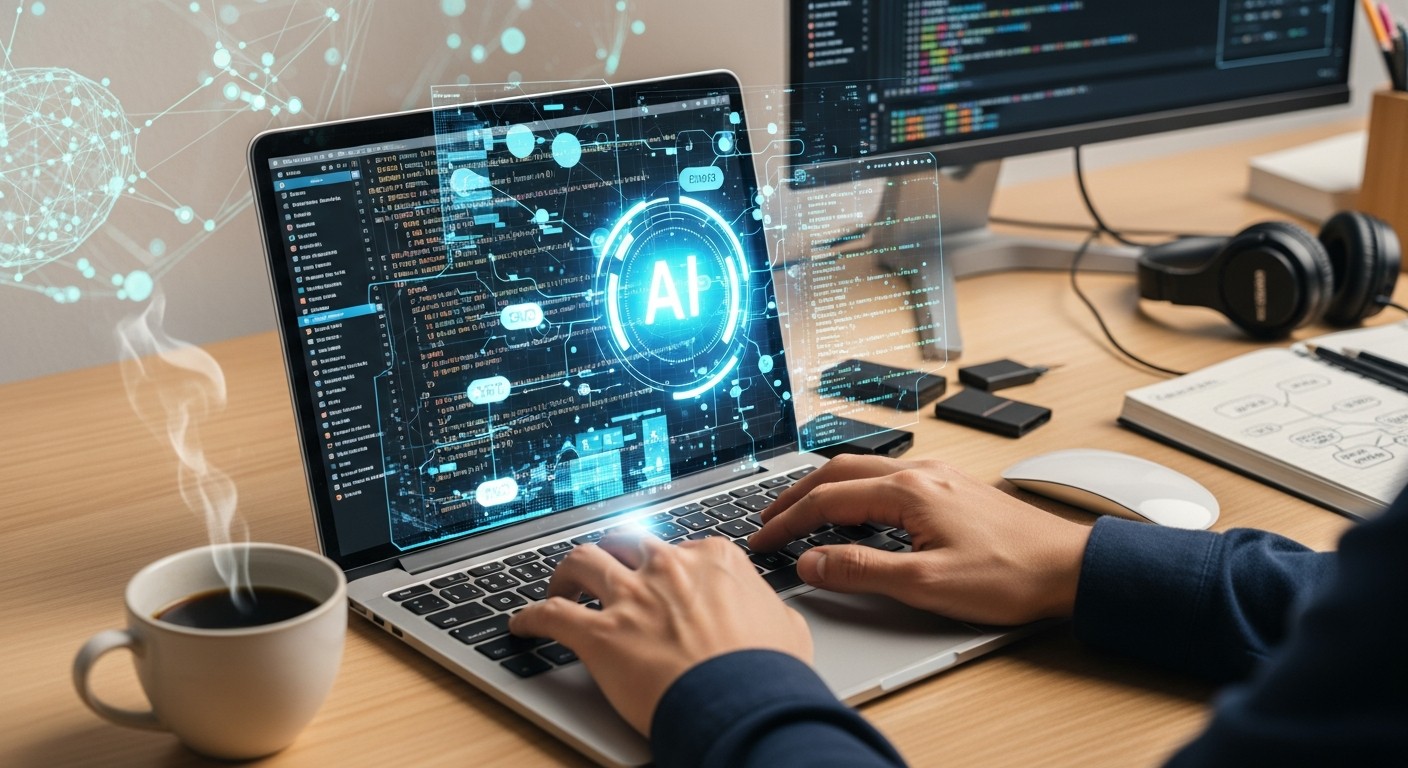
Artificial intelligence (AI) is fundamentally altering the landscape of web and app development, moving beyond theoretical concepts into practical, impactful applications. For businesses and individuals looking to leverage advanced digital technologies, understanding these shifts is crucial. This discussion focuses on specific ways AI integration influences the development process and the resulting user experience, rather than offering a broad overview of AI itself.
The Evolving Development Workflow
Integrating AI into web and app projects introduces new considerations throughout the development lifecycle. Traditionally, many development tasks relied heavily on manual processes and explicit rule sets. With AI, elements like data preprocessing, model training, and deployment pipelines become integral components of the development workflow.
Automated Testing and Quality Assurance
One significant impact of AI is in automating testing and quality assurance. In cases where applications have complex user interfaces or intricate business logic, AI-powered testing tools can identify anomalies and potential bugs more efficiently than traditional methods. What often causes issues is the sheer volume of possible user interactions; AI can simulate diverse scenarios, learning from past test failures to predict future weak points. This approach can significantly reduce the time spent on manual testing and improve the overall robustness of an application.
Intelligent Code Generation and Optimization
AI is also beginning to assist with code generation and optimization. While not yet fully autonomous, AI tools can suggest code snippets, refactor existing code for better performance, or even identify security vulnerabilities. When X applies, such as developing repetitive boilerplate code, AI assistance is common, allowing developers to focus on more complex, creative problem-solving. This doesn’t replace human developers but augments their capabilities, potentially accelerating development cycles for web development and app development projects.
Enhancing User Experience with AI
Beyond the development process, AI integration profoundly impacts the end-user experience, making applications more intuitive, personalized, and engaging.
Personalized Content and Recommendations
AI algorithms are adept at analyzing user behavior and preferences to deliver highly personalized content and recommendations. This is particularly evident in e-commerce platforms, media streaming services, and content aggregators. When a user interacts with an application, AI systems can dynamically adapt the interface or suggest relevant products, articles, or services. The effectiveness of this personalization heavily depends on the quality and volume of data fed to the Machine Learning models.
Natural Language Processing for User Interaction
Natural Language Processing (NLP), a branch of AI, is revolutionizing how users interact with applications. AI chatbots and virtual assistants are now common features, providing instant support, guiding users through complex processes, or enabling voice-controlled interfaces. This technology allows for more natural and conversational interactions, enhancing accessibility and user satisfaction. Challenges often arise in handling nuanced language or understanding context, requiring continuous model refinement and extensive training data.
Predictive Analytics for Proactive Features
AI-driven predictive analytics enable applications to anticipate user needs and proactively offer solutions. For instance, a finance app might predict upcoming expenses and suggest budgeting adjustments, or a travel app might forecast flight delays and recommend alternative routes. This foresight can significantly improve an application’s utility, transforming a reactive tool into a proactive assistant. Implementing predictive features often involves integrating with various data sources, sometimes leveraging cloud hosting solutions for scalable data processing and storage, and utilizing API integration to connect disparate systems.
Considerations for AI Implementation
While the benefits are clear, successful AI integration requires careful planning. Factors include data privacy, ethical considerations, computational resources, and the need for specialized expertise in AI and Machine Learning. The choice of AI models, the infrastructure for training and deployment, and ongoing maintenance are critical to the long-term success of an AI-powered solution.
For those interested in the broader context of advanced digital technologies, including comprehensive guides on AI, Machine Learning, and various development methodologies, additional resources are available on the main sections of this site.
Leave a Reply